Tech Target published an interesting piece about how backups can generate a considerable carbon footprint when transmitting and storing data, which can be avoided or reduced with measurement and planning.
Scientists from Australia's Southern Cross University (SCU) and the Italian Institute of Technology (IIT) recorded bioelectrical signals sent from older trees to warn others of an upcoming eclipse, so that they could conserve energy.
Nirvanic are developing a quantum consciousness test platform to test theories on the possibility of quantum mechanics being responsible for consciousness. The test setup takes input from a webcam attached to a robot, sends the data to a D-wave quantum computer, which then returns a desired action for the robot to take. The idea is to compare the quantum powered setup with a classical system to see if there are any differences in the actions returned from the camera input.
A recent post by Seth Godin lists out some great rules to be reminded of when working with others, like "Don’t invite someone to a meeting if an email or 1:1 conversation will do the job just as well", as well as other respectful productivity rules.
A recent episode of The Climate Alarm Clock podcast raises some excellent questions about why climate adaptation isn't currently being focussed on as much as climate mitigation, and why this is a bad idea.
Researchers at NTT built a drone wrapped in a Faraday cage, flew it into a storm with a tethered conductive cable attached to a high-voltage on the ground, switched it on and induced a lightning strike through the drone. The system could be used to protect an area from lightning strikes by diverting them during a storm.
The Mission Extension Satellite 1 (MEV-1) is a satellite that attached to an existing satellite that has run out of propellant in order to extend its mission by five years. The MEV-1 synchronised orbit with the satellite, attached itself, pushed both into a new orbit, and reversed the process at the end of the five years.
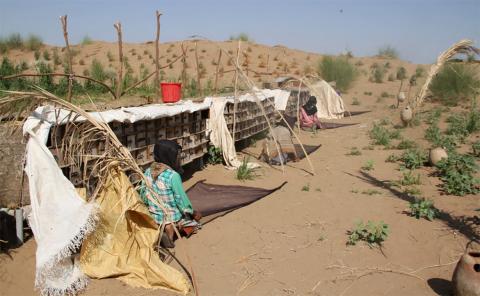
Reasons To Be Cheerful published an interesting piece about migratory beekeepers in Yemen that move their hives to track the blooming seasons of the Sidr flower to produce the expensive Sidr honey. Practising migratory beekeeping increases the population of bees, but is not without its challenges from climate change, Malaria pesticide spraying, and illegal Sidr tree logging.