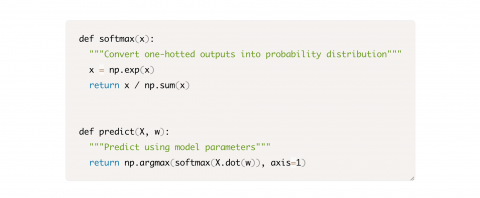
Google have launched The Lever, a blog that presents the best practices in applying machine learning, including posts about how to approach adding machine learning to your product, and posts about how to gather or acquire data.
Before Satoshi and Bitcoin, researchers Stuart Haber and Scott Stornetta invented the blockchain concept in a paper published in the Journal of Cryptography in 1991. They then went on to found a company called Surety which provided timestamping and digital seal services for digital documents.
KODAK One have completed a trial with stock image service Lobster to monitor and report on the use of 10,000 images from the Lobster libarary across the web for a two week period. The trial demonstrates the successful implementation of three services from KODAK One's image rights management platform, their image recognition system, web crawlers and post-licencing services. They plan to continue the trial by reigstering all images in the Lobster library on the KODAK One blockchain.
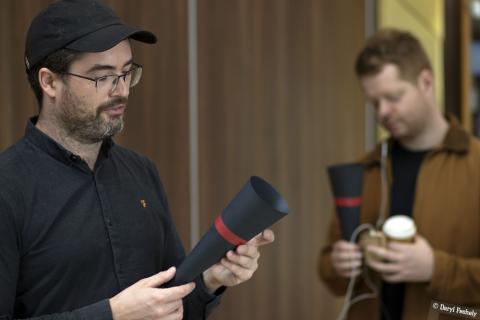
This week I attended the ISSTA Limerick Sound Festival 2018 in The Irish World Academy in The University of Limerick. The day centered around 3 fantastic concerts with workshops, soundwalks and discussions between them. Checkout my photos from the festival here.
This Smashing Magazine tutorial demonstrates how to build a machine learning model that can predict which room you are in based on the signal strength of wifi networks around you. The system requires a map of the networks to be recorded and a model trained using the recorded data. Such a system could be useful to passively trigger IOT devices based on which room your phone is in, without the need for active notification methods like bluetooth beacons.
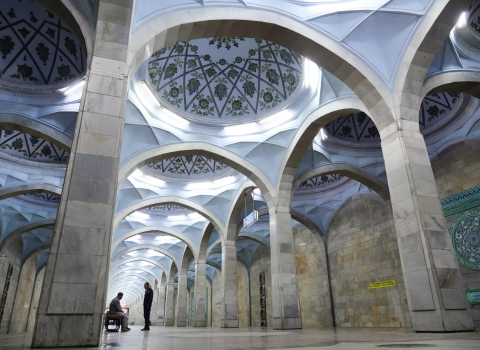
The Tashkent Metro system in Uzbekistan doubles as a nuclear fallout shelter and as a result, all photography was banned in the metro until recently. The Guardian have a nice feature of photographs taken by Amos Chapple of the art and architecture of the Tashkent metro after the ban was lifted.
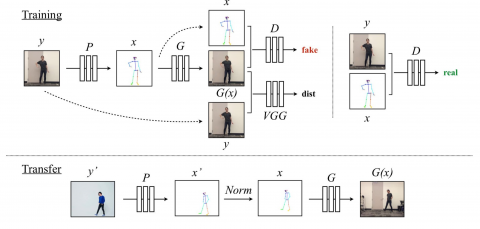
Researchers at UC Berkeley have developed a motion video retargeting system that captures dance moves from a source dancer and generates video of those dance moves being performed by a target dancer, using pose detection as the transfer medium, with seemingly good face synthesis and motion smoothing.
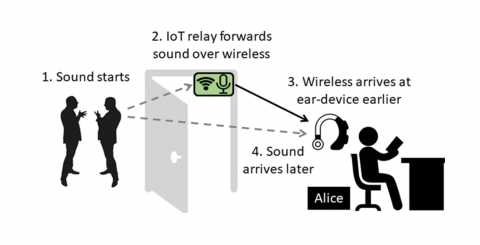
Researchers at the University of Illinois' Coordinated Science Laboratory have demonstrated a better mechanism for noise cancelling headphones that uses wireless signals to send sound data from microphones close to the sound source, allowing less processing and microphone hardware to be installed on the headphones themselves.