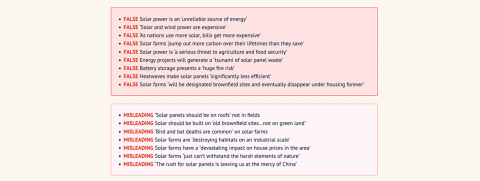
Carbon Brief published an excellent piece debunking and clarifying 16 myths about solar power, from fire risk, excessive waste fears, wildlife deaths, and dependence on China.
Adaptation Scotland published a useful checklist for businesses to assess their climate resilience, across 5 climate impact topics People, Products, Premises, Processes, and Place.
Our World In Data published a graph showing the scientific advancements and discoveries that are estimated to have saved the most lives, along with the scientists responsible for each advancement.
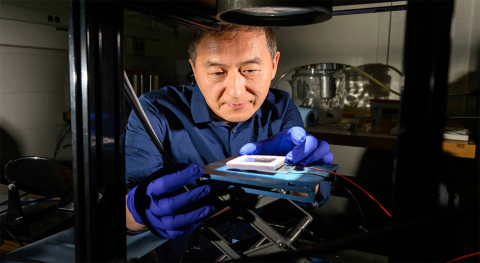
Researchers at the University of Rochester have increased the efficiency of a solar thermoelectric generator (STEG) to 15% by improving heat dissipation on the cold side and heat absorption on the hot side of the panel.
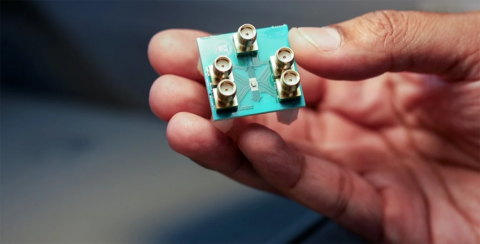
Researchers at Cornell University have developed an analog microwave based neural network chip with low power usage (200 milliwatts) and 88% accuracy at classifying wireless signal types.
This week David McWilliams interview Brendan Greeley and they discussed an interesting viewpoint about how US Treasury bonds, aka national debt, has become decoupled from any risk assessment and can be used by America as a commodity natural resource. This has worked for decades because of the inherent trust of the market in US institutions, which is now being dismantled.
The US Military will be testing a quantum inertial sensor on board an upcoming X037B spaceflight. The quantum navigation device users atom interferometry to supercool atoms and measure overlapping waves patterns of the atoms, which represent positional shifts. The method produces accurate dead-reckoning without any drift or need for external references.