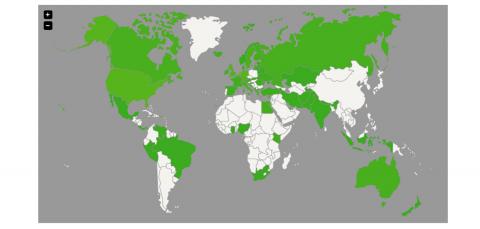
The Green Web Foundation publish a directory of web hosting companies in every country that provide proof of their green claims. Choose a provider on this green list the next time you are buying a hosting package.
Bill Gates published a blog post about his thoughts on the future of transport, in particularly vehicle transport. Electric vehicles are great for short haul, provided the efficiency of battery weight to range is improved. He sees the future of long-haul transport in biofuels, that can take CO2 from the atmosphere and combine with water to create hydrogen without any waste. These biofuels power vehicles and extract CO2 from the air, a win win!
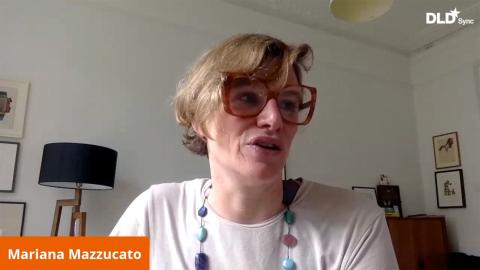
The Digital-Life-Deisgn (DLD) Conference recently interviewed economist Mariana Mazzucato about the concept of Rebooting Capitalism. Mariana spoke about how mission driven economies and strategies, which structured value and equity dissemination, is the way forward for a constructive capitalist society that benefits its citizens and the planet.
The Climate Strike Licence is a software usage licence that software developers can apply to their open source projects to prohibit the use of their code by applications or companies that threaten to accelerate climate change through fossil fuel extraction.
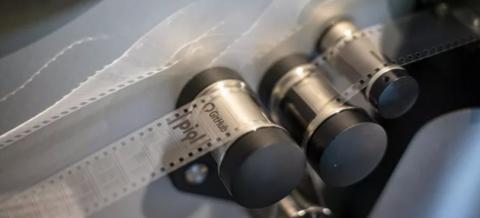
Github deposited 21TB of silver halides QR code data on archival polyester reels into Arctic World Archive, down the road from the Svalbard Global Seed Vault. The 186 archival film reels will be stored 250m below the permafrost and are due to last 1000 years.
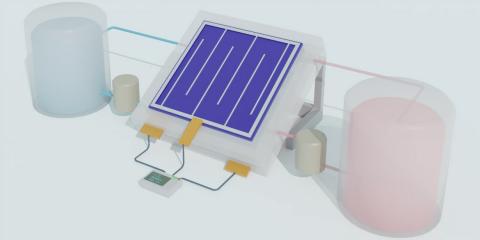
Researchers at University of Wisconsin-Madison have created a new device called a solar flow battery. The device combines a silicon/perovskite tendem solar cell with a chemical based redox flow battery. The device produces consistent 20% energy efficiency from a charge at any time.
A nation by nation assessment published in Nature shows that adding crushed rock (finely crushed basalt) to farmland could absorb up to two billion tonnes of carbon dioxide from the air per year. The technique is called enhanced rock weathering and by-products of iron and stell manufacturing, and construction, could be processed to produce the rock dust needed. (H/T to Jenn for sharing this.)
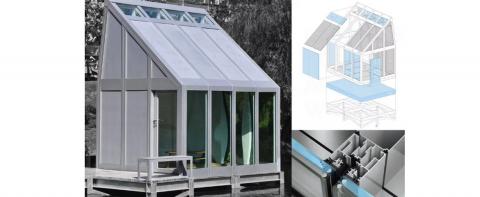
Dr. Matyas Gutai of Loughborough University has developed and tested a new energy efficient building option, Water Filled Glass (WFG) windows. The WFG system holds water between layers of glass windows, allowing the sun to heat the water, providing insulation and sound proofing. The hot water is then pumped out, replaced, and stored in a water tank. When the temperature drops, the hot water is circulated around pipes to heat the building.
Low Tech Magazine published an interesting article on equipping a stove with a thermoelectrical generator (TEG). A TEG is about 5% efficient at generating electricity, however if the heat from the stove is being generated anyway for other reasons (heating, cooking etc), then adding a TEG would be a more reliable way to generate electricity than installing solar panels.
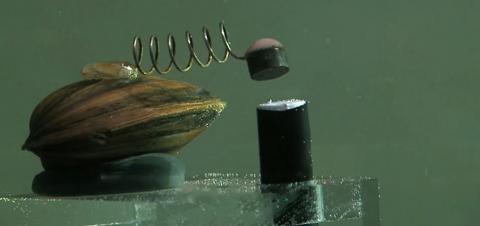
The city water supply of Warsaw in Poland uses a rotating team of 8 clams to test the water quality of the supply. If the clams close after detecting toxins in the water supply, they complete a circuit which trips and alarm and shuts off the water supply of the city. (H/T to Mikael for sharing this)