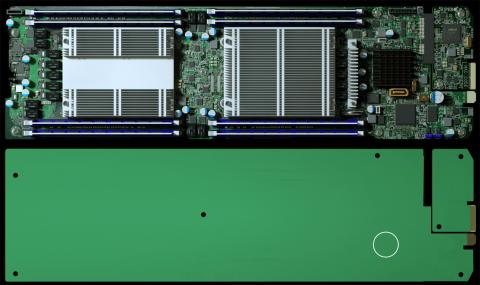
Bloomberg Businessweek released a mind-blowing exposé on a massive Chinese government hardware hack that appears to have affected huge organisations like Amazon AWS, Apple and the U.S. government.
The Londis on the DCU Glasnevin campus is to launch a state of the art AI powered inventory management and pricing system. The system will use a Panasonic vision system to monitor shelf activity as well as a dynamic pricing system using digital tags on the shelves of the newly refurbished store at the new DCU Student Centre.
Inventor of the world wide web Tim Berners Lee has announced the launch of a new open source project called Solid. The project aims to provide a new paradigm for access and sharing personal data online. Users control their own data in a POD and explicitly grant read and write permissions on their data.
The makers of Sublime Text have released a free visual GIT tool called Sublime Merge. This is a beautiful piece of software and extremely useful at visualising complex GIT repositories.
Mozilla have launched Firefox Reality, a web browser for VR. Users can use voice activation to search using the in experience browser window and can also jump into 3D content using the browser.
A new app called Find It in the Play Store allows you to search for text while point your phone at a body of text. The app uses Google's OCR library to read text from the camera and search it in real time.
A company called Global Energy Transmission (GET) have developed and indictive charging solution to allow drones to charge wirelessly, while in flight. The system can transmit up to 12kW of power at approx. 80% efficiency.
Cloudflare have realeased thie IPFS Gateway product as part of Crypto-week. The Interplanetary File System (IPFS) is a peer to peer web hosting and deliver system aimed at reducing the dependncy on the current server based architecture of the web. Pages on IPFS are accessed using a hash of their content as an address, and those pages are stored on a peer-to-peer system around the IPFS network.
Researchers at MIT have developed an intelligence augmentation device that is capable of detecting and transmitting verbalised words that are not spoken. The device measures neuro-muscular signals in the jaw and face that are triggered when words are internally verbalised inside the users head but not spoke out loud.